Chatbot AI vs Chatbot Biasa: Mana yang Tepat untuk Anda?
Dua arsitektur, dua mode gagal
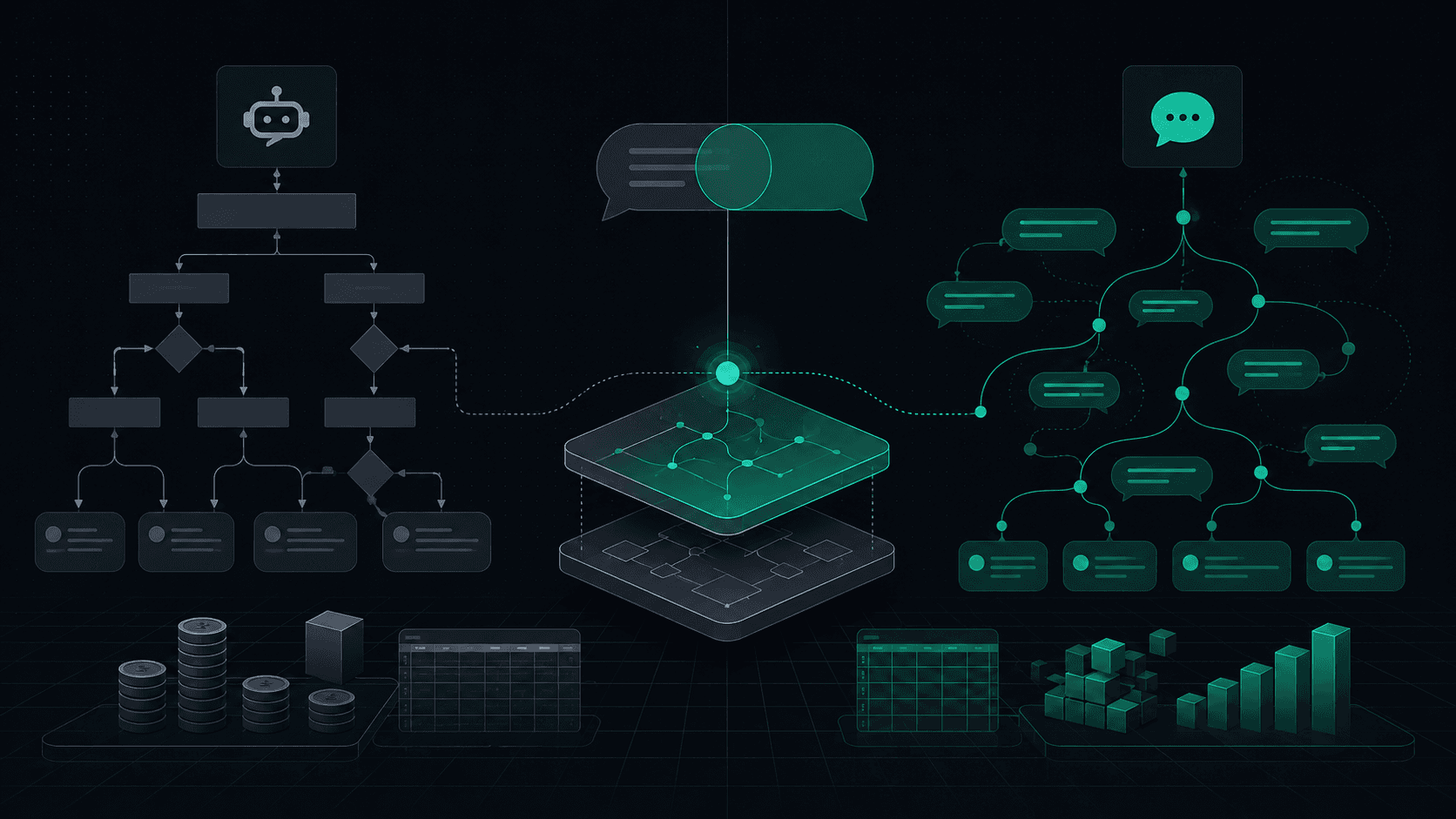
Setiap bisnis evaluasi chatbot ketemu fork yang sama: rule-based (menu tree, trigger keyword, script fixed) versus AI-powered (LLM + retrieval, paham intent, balasan generatif). Pilihannya bukan "pintar vs bodoh" — tapi predictable vs flexible, dan masing-masing gagal berbeda.
Bot rule-based gagal saat user ketik di luar path yang Anda desain — menu salah, slang, pertanyaan multi-bagian, atau ganti bahasa mid-conversation. Bot AI gagal saat terdengar confident tapi miss kebijakan bisnis, invent jawaban, atau terlalu lama di chat padahal manusia harus ambil alih.
Di 2026 default production untuk customer-facing serius adalah hybrid: AI handle bahasa dan retrieval knowledge; layer rules kontrol action, form, routing, refund, dan eskalasi. Pure rule-based masih menang untuk funnel konversi sempit; pure AI tanpa guardrail liability.
Chatbot rule-based dijelaskan
Bot rule-based ikuti logika if-this-then-that: menu tombol, map keyword, dan decision tree yang Anda desain advance. Respons predetermined — bot tidak pernah "create" bahasa, hanya pilih cabang.
Kekuatan: fully predictable, mudah audit compliance, cepat launch untuk flow sederhana (booking appointment, capture lead, instruksi reset password), biaya infra lebih rendah, tidak ada tagihan token LLM.
Kelemahan: brittle pada bahasa natural, mahal maintain saat cabang multiply, experience buruk saat user tanya compound, setiap skenario baru butuh authoring manual — bukan learning.
Chatbot AI dijelaskan
Chatbot AI pakai large language model plus knowledge base Anda (doc FAQ, katalog produk, kebijakan) untuk menafsirkan intent dan menyusun balasan. Parafrase ikut tertangani — "mau refund" dan "bisa return ini?" merujuk ke intent yang sama tanpa Anda tulis kedua path.
Kekuatan: percakapan natural, multilingual (kritis di Indonesia: Bahasa Indonesia, Inggris, dan campuran regional dalam satu thread), scale ke ribuan pertanyaan unseen bila grounded retrieval, coverage after-hours tanpa script setiap edge case.
Kelemahan: butuh guardrail anti-hallucination, evaluasi ongoing saat produk berubah, biaya per pesan lebih tinggi di scale, dan butuh eskalasi eksplisit ke manusia untuk dispute, pembayaran, dan komplain emosional.
Perbandingan side-by-side
Pemahaman: rule-based = matching keyword dan menu. AI = intent dan konteks across turns.
Maintenance: rule-based tumbuh seperti hutan flowchart — setiap promo dan perubahan SKU tambah cabang. AI shift effort ke update knowledge base dan evaluation set instead of redraw tree.
Akurasi: rule-based 100% akurat di dalam path yang didesain dan 0% di luar. AI bisa highly accurate bila grounded dan constrained, tapi Anda manage risiko confabulation dengan retrieval, refusal rule, dan handoff manusia.
Biaya: rule-based lebih murah di kompleksitas rendah; AI tambah biaya API tapi hemat waktu authoring saat variasi percakapan tinggi. Hybrid tambah engineering upfront, turunkan total cost of ownership untuk traffic mixed.
Compliance: rule-based lebih mudah pre-approve verbatim. AI butuh constraint kebijakan, logging, dan fallback phrase — terutama finance, health, dan klaim regulated.
Kapan pilih rule-based
Pilih rule-based saat journey fixed dan disiplin konversi penting: registrasi event, slot appointment sederhana, survey NPS, atau form quote tiga langkah di WhatsApp.
Juga saat budget ketat, legal butuh script approved verbatim, atau volume rendah enough sehingga menu well-designed beat tagihan model.
Jika 80%+ percakapan fit lima path atau kurang yang bisa digambar satu whiteboard, rule-based mungkin cukup fase satu — upgrade ke hybrid saat user rutin break menu.
Kapan pilih AI (atau hybrid)
Pilih AI atau hybrid saat pertanyaan open-ended: rekomendasi produk, troubleshooting, status order dengan phrasing berantakan, atau support across WhatsApp + web + Instagram dengan satu knowledge base.
Juga saat butuh Bahasa Indonesia dan Inggris dalam thread sama tanpa maintain tree duplikat, atau coverage after-hours harus cukup human retain lead.
Pattern hybrid yang paling sering kami deploy: LLM interpret pesan → retrieval pull snippet approved → rules engine putuskan action allowed (buat tiket, tampilkan link tracking, eskalasi) → manusia dapat summary handoff terstruktur. AI tidak pernah freestyle refund atau diskon tanpa rule.
Checklist keputusan untuk bisnis Indonesia
Mulai di sini: (1) List 20 pertanyaan pelanggan top — jawaban fixed atau diskusi terbuka? (2) Chat di mana — WhatsApp primary? (3) Action apa yang tidak boleh diotomasi — refund, saran medis, komitmen legal? (4) Siapa update konten saat harga berubah — kalau tidak ada, tidak ada bot yang survive lama.
Rule-based jika: path predictable, budget ketat di bawah ~Rp 15 juta, compliance butuh script verbatim, volume harian rendah di bawah ~50 percakapan.
AI atau hybrid jika: bahasa variatif, 100+ percakapan/hari, multilingual, atau knowledge spread di PDF dan Notion yang tidak ada yang mau jadi 200 node menu.
Masih ragu? Jalankan shadow mode satu minggu: log pertanyaan WhatsApp nyata tanpa otomasi. Hitung berapa fit menu vs butuh free text. Rasio itu prediksi arsitektur lebih baik dari demo vendor mana pun.
Ini yang dikerjakan AI WhatsApp Operator — cara kerjanya, batasnya, dan dari mana biasanya orang memulai.
 Otomasi AI
Peluncuran minggu ini di Indonesia mengulang satu kalimat jujur: AI yang bicara harus juga menyelesaikan kerja di balik chat. Cara UMKM memakai sinyal itu tanpa terjebak hype chatbot.
 Otomasi AI
Meta akan menagih pesan layanan di WhatsApp Business Platform mulai 1 Oktober 2026, dengan kuota gratis 1.000 pesan per nomor bisnis tiap bulan. Tarif daftar Indonesia mendekati Rp356,65 per balasan terkirim. Peta biaya praktis sebelum tagihan datang.
 Otomasi AI
AI bawaan Meta bisa balas chat sepanjang hari. Mulai 1 Oktober 2026 balasan service message berbayar, dan agen FAQ masih bukan pesanan yang masuk dapur. Panduan jujur buat UMKM dan kafe di Indonesia.