5 Proses Bisnis yang Bisa Diotomasi dengan AI — dan Berapa Biayanya
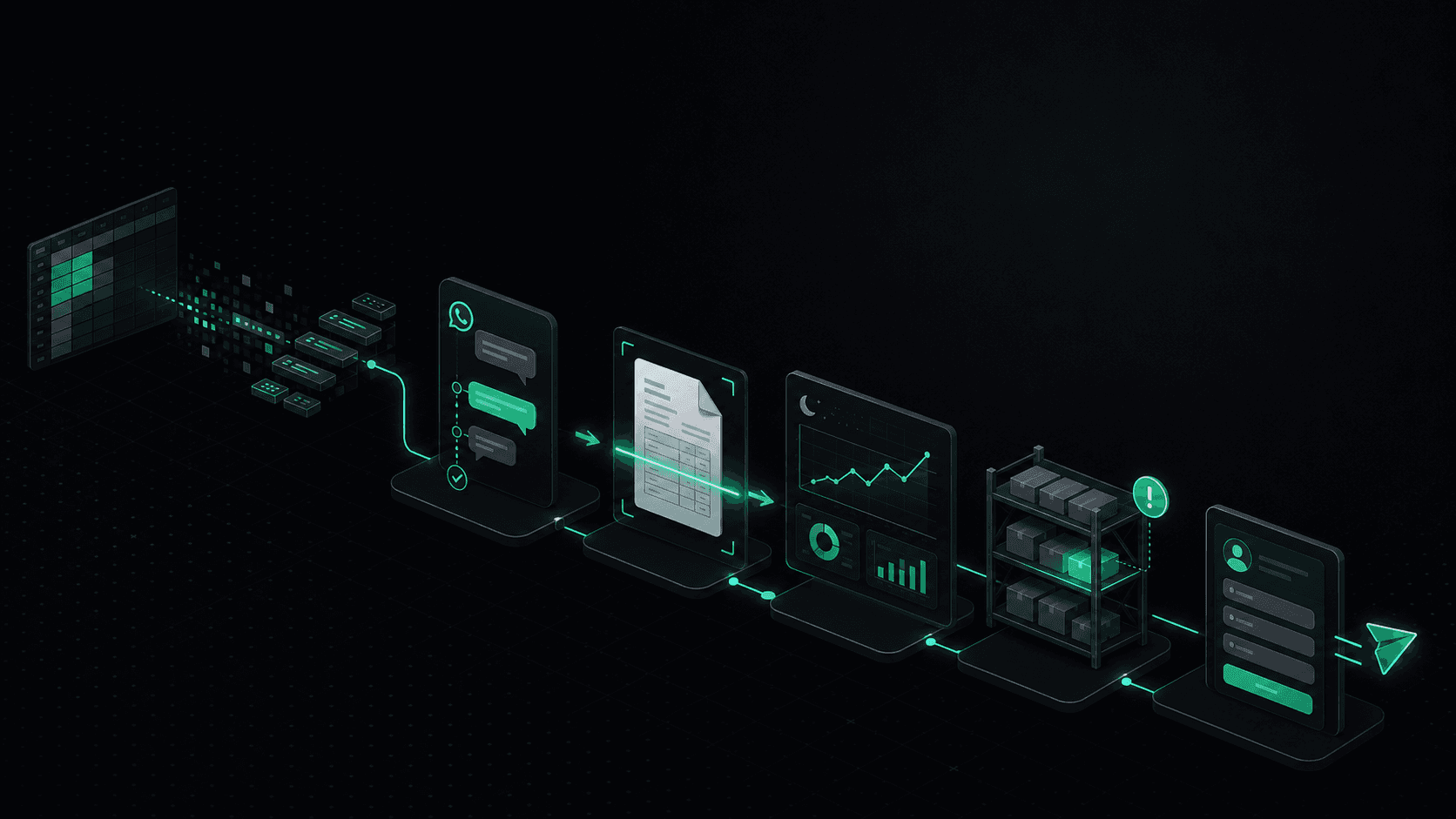
Biaya nyata proses manual
Dalam dua tahun terakhir, kami audit operasi lebih dari 30 bisnis Indonesia — dari kafe single-location hingga manufaktur menengah. Lima bottleneck yang sama terus muncul. Semuanya bisa diselesaikan dengan otomasi AI. Berikut temuan kami, termasuk estimasi biaya dan timeline yang realistis.
Kebanyakan UMKM Indonesia masih menjalankan customer service WhatsApp manual, inventory di spreadsheet, dan laporan di Excel. Jurang antara bisnis yang sudah otomasi proses ini dan yang belum melebar setiap kuartal. Pekerjaan manual tidak gratis — ia muncul sebagai respons lambat, stockout, error laporan, dan tim yang tidak bisa scale tanpa rekrutmen.
Kebanyakan bisnis overestimate apa yang AI bisa lakukan di tahun pertama — dan underestimate di tahun ketiga. Mulai dari satu proses dengan ROI tertinggi. Buktikan. Baru scale.
Customer service via chatbot AI
Request paling sering kami terima. Bisnis menghabiskan 4–6 jam per hari menjawab 20 pertanyaan yang sama via WhatsApp, Instagram DM, dan chat website. Chatbot AI yang dilatih dari katalog produk, FAQ, dan kebijakan Anda menangani 70–80% otomatis — 24/7, dalam Bahasa Indonesia dan Inggris.
ROI realistis: bisnis dengan tim CS 3 orang biasanya reclaim 60–80 jam per bulan. Dengan biaya loaded Rp 30.000/jam, itu Rp 1,8–2,4 juta per bulan. Integrasi chatbot WhatsApp + web yang di-scope biasanya Rp 15–25 juta dan 3–5 minggu ke production.
Paling efektif bila jawaban Anda konsisten dan terdokumentasi. Butuh jalur eskalasi ke manusia untuk edge case. Perlu refresh knowledge base setiap kuartal seiring produk dan kebijakan berubah.
Proses dokumen dengan OCR + NLP
Proses invoice, scan struk, ekstraksi kontrak — bisnis yang input ulang data dokumen ke spreadsheet atau ERP manual membuang 2–4 jam per karyawan per hari. Pipeline OCR + NLP mengekstrak data terstruktur dengan akurasi 95%+ pada dokumen bersih.
ROI realistis: distributor kecil yang proses 200 invoice/hari @ 3 menit per dokumen reclaim sekitar 10 jam harian di seluruh tim. Break-even biasanya 6–8 minggu setelah deploy jika error reduction dan siklus pembayaran lebih cepat ikut dihitung.
Mulai dari satu jenis dokumen (invoice supplier, surat jalan, atau PO). Expand hanya setelah akurasi dan workflow approval stabil di production.
Laporan otomatis dan dashboard
Tim finance dan ops compile laporan mingguan/bulanan manual dari POS, spreadsheet, dan tools akuntansi. Laporannya sendiri 4–6 jam; saat selesai, data sudah 3 hari basi. Pipeline otomatis tarik dari sumber Anda, refresh nightly, kirim laporan ke inbox atau Slack setiap Senin pagi.
Ini bukan proyek dashboard vanity. ROI datang dari keputusan lebih cepat — deteksi erosi margin, SKU lambat, atau gap cash-flow sebelum jadi krisis. Build tipikal: 2–4 minggu untuk satu laporan konsolidasi; Rp 10–20 juta tergantung kompleksitas sumber data.
Inventory dan logika reorder
Kehabisan SKU fast-moving, atau overstock slow-mover — keduanya gerus margin. Model sederhana yang dilatih dari 6–12 bulan history penjualan plus lead time supplier memprediksi titik reorder dengan akurasi 85–92% pada product line stabil.
Hubungkan alert ke WhatsApp atau email agar purchasing act sebelum stockout. Scope biasanya satu gudang atau satu cluster toko dulu. Engineering: 3–6 minggu; value ongoing compound saat Anda tambah SKU dan lokasi.
Kualifikasi lead dan follow-up
Lead dari form website, WhatsApp, dan Instagram mati karena tidak ada bandwidth follow-up dalam 15 menit pertama — saat conversion rate tertinggi. Kualifikasi otomatis ajukan 3–4 pertanyaan terstruktur, segmentasi intent, trigger follow-up yang tepat segera, kapan pun.
Pair dengan CRM atau Google Sheet sederhana jika belum punya CRM. Ukur response time dan qualified-lead rate sebelum/sesudah. Kebanyakan tim lihat lift meaningful dalam 30 hari pertama tanpa tambah headcount.
Mulai dari mana
Jangan otomasi semuanya sekaligus. Pilih satu proses di mana waste waktu paling terlihat dan datanya sudah cukup konsisten. Otomasi, ukur 4 minggu, baru tentukan langkah berikutnya.
Biaya bervariasi menurut scope, tapi kebanyakan otomasi single-process selesai dalam beberapa minggu engineering dan ROI terukur dalam 60–90 hari. Kami selalu rekomendasikan satu proses, satu metrik, satu perbaikan terukur.
Kalau belum yakin proses mana dulu, itulah fungsi konsultasi gratis kami. 30–60 menit pahami operasi Anda, identifikasi target ROI tertinggi, dan estimasi tertulis — tanpa komitmen.
Mau scope custom untuk bisnis Anda? Konsultasi gratis kami 30 menit — tanpa komitmen.
 Otomasi AI
Peluncuran minggu ini di Indonesia mengulang satu kalimat jujur: AI yang bicara harus juga menyelesaikan kerja di balik chat. Cara UMKM memakai sinyal itu tanpa terjebak hype chatbot.
 Otomasi AI
Meta akan menagih pesan layanan di WhatsApp Business Platform mulai 1 Oktober 2026, dengan kuota gratis 1.000 pesan per nomor bisnis tiap bulan. Tarif daftar Indonesia mendekati Rp356,65 per balasan terkirim. Peta biaya praktis sebelum tagihan datang.
 Otomasi AI
AI bawaan Meta bisa balas chat sepanjang hari. Mulai 1 Oktober 2026 balasan service message berbayar, dan agen FAQ masih bukan pesanan yang masuk dapur. Panduan jujur buat UMKM dan kafe di Indonesia.